

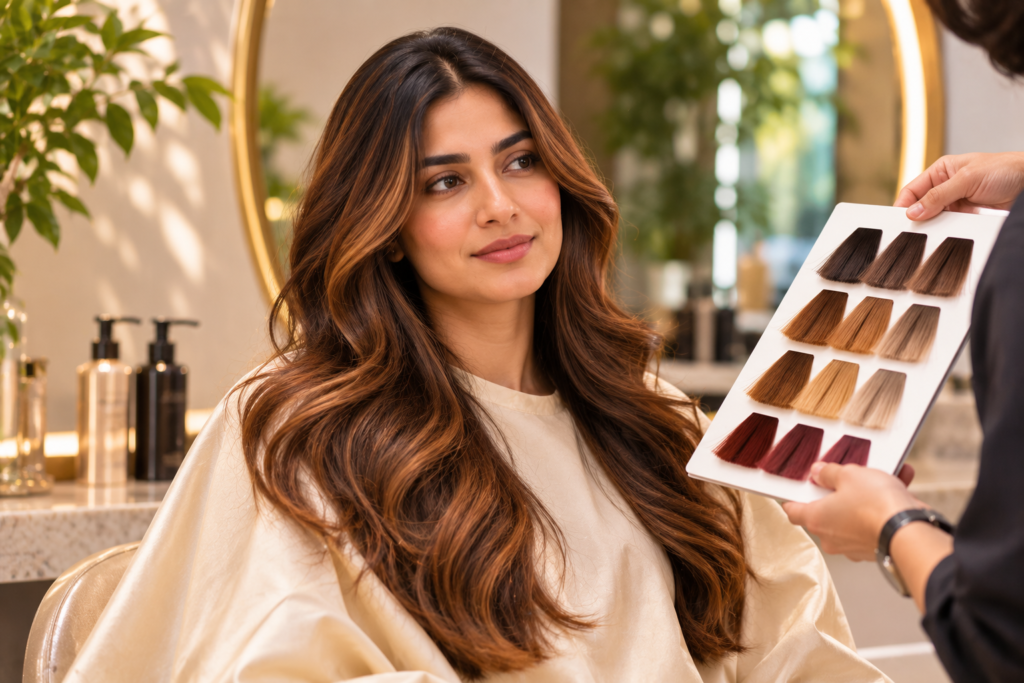
A hair colour can look stunning on one person and slightly off on another, even in the exact same shade. More often than not, the difference is not the colour itself but how it interacts with skin undertone. Understanding this before your next appointment can make the difference between a colour that flatters you and one that simply changes your hair.
Understanding Skin Undertones
Skin tone refers to the surface colour of your skin, while undertone is the subtle hue beneath it that stays consistent regardless of tan or season. Undertones generally fall into three categories: warm (yellow, peachy or golden hints), cool (pink, red or bluish hints), and neutral (a balanced mix of both). A simple way to get a sense of your undertone is to look at the veins on your wrist in natural light: greenish veins tend to suggest warm undertones, bluish or purple veins suggest cool undertones, and a mix of both suggests neutral.
Hair Colours That Complement Warm Undertones
If your undertone leans warm, shades with golden, caramel, honey or copper hints tend to harmonise well, since they echo the same warmth already present in your skin. Rich chocolate browns with warm highlights, golden blondes and auburn tones generally work in your favour, while very ashy or cool-toned colours can sometimes create a washed-out contrast against warm skin.
Hair Colours That Complement Cool Undertones
Cool undertones tend to pair well with shades that have blue, violet or ash hints rather than gold or orange. Cool-toned browns, platinum or ash blondes, and jewel-toned colours such as deep burgundy generally sit well against cool skin, while overly warm, golden tones can occasionally clash rather than complement.
Neutral Undertones and Versatility
If your undertone is neutral, you generally have more flexibility, since both warm and cool-leaning colours tend to work reasonably well. This does not mean every shade is automatically a good fit; it simply means the decision often comes down to personal preference, hair texture and the specific look you are going for, rather than being limited by undertone alone.
Beyond Undertone: Other Factors Worth Considering
Skin tone and undertone are an important starting point, but they are not the only consideration. Eye colour, natural hair colour, lifestyle and how much maintenance you are willing to commit to all factor into the right choice. A colour that suits your undertone but requires maintenance you are not prepared for may not be the right practical choice, even if it would look flattering in theory. Our comparison of Global Hair Colour vs Highlights is a useful next step if you are also deciding between a full colour change and a more subtle, dimensional approach.
Depth and Contrast: How Light or Dark to Go
Undertone tells you which family of shades tends to suit you, but depth, meaning how light or dark the colour is, decides how dramatic the result looks. A large jump from your natural colour creates strong contrast with your skin, which can look striking but also draws attention to every feature. A shade a couple of levels away from your natural colour usually looks softer and grows out more gracefully. If you have not coloured your hair before, starting closer to your natural depth and adjusting at later appointments is often a more comfortable way to find what you like.
Does the Technique Change the Advice?
To a degree, yes. A global colour applies one shade across the whole head, so undertone matters most, because the colour sits beside your face everywhere. Highlights and balayage add dimension and let you place lighter pieces around the face, which can soften an undertone mismatch and give a more lived-in look. Subtle face-framing tones can also brighten the complexion without a full colour commitment. Choosing between these approaches is a decision in its own right, and it is worth settling before you settle on a shade.
Common Mistakes When Choosing a Colour
- Copying a celebrity photo without considering that their skin, hair and lighting differ from yours.
- Choosing a shade that fights your undertone, such as a strongly golden tone on skin that leans cool, and then wondering why it looks off.
- Ignoring maintenance: pale or vivid shades usually need more frequent upkeep than shades close to your natural colour.
- Judging the colour from a single photo in artificial light instead of seeing it in daylight.
- Skipping a consultation and relying on a box shade or a general chart.
Why a Consultation Still Matters
Undertone guidelines are a helpful starting point, but they are general principles, not a substitute for a trained eye assessing your specific skin, hair and features in person. A colourist can see nuances that a general guide cannot account for, including how a shade will look once it has settled and faded slightly, which is often different from how it looks the day it is applied. This is exactly why Merakki’s colour consultations involve a proper discussion before any colour is chosen, rather than simply picking a shade off a chart.
Eye Colour and Natural Hair Also Play a Role
Skin undertone is the most reliable starting point, but it is not the only factor worth considering. Eye colour can shift how a shade reads once it is applied: warm brown eyes often pick up added richness from caramel or copper tones, while lighter eyes can appear more striking against contrast, such as a cooler ash shade against hazel or green eyes. Your natural hair colour matters too, since the amount of lift or deposit needed to reach a chosen shade affects how it will look and how it will fade over time. None of this means undertone stops mattering; it simply means a colourist is weighing several factors together, not applying a single rule in isolation.
A Simple Starting Point Before Your Appointment
If you are unsure where to begin, it helps to bring a few reference photos of shades you are drawn to, along with an honest sense of how much maintenance you are willing to commit to. This gives your colourist a clearer picture to work from, which they can then refine based on your undertone, eye colour and natural hair, rather than starting from nothing. Arriving with a general direction, rather than a fixed, non-negotiable shade, tends to produce the most flattering and realistic result.
FAQs
Q1. How can I figure out my undertone at home?
Checking your wrist veins in natural light is a simple starting point, though a professional consultation gives a more reliable assessment alongside your hair type and features.
Q2. Can I still choose a colour that doesn’t match my undertone guidelines?
Yes, these are general guidelines rather than strict rules. A skilled colourist can adjust tones, such as adding warmth or coolness to a base shade, to help a colour work better for you.
Q3. Does undertone matter for highlights as much as full colour?
Yes, though highlights offer more flexibility since they do not cover the entire head, which can soften the effect of an undertone mismatch compared to global colour.
Q4. Will my hair colour look different once it fades?
Yes, most colours shift slightly as they fade, which is something an experienced colourist accounts for when recommending a shade and a maintenance schedule.
Q5. How do I keep my colour looking fresh for my skin tone over time?
Regular root touch-ups and the right aftercare routine both help. Our guide on hair colour aftercare covers this in detail.
Find Your Most Flattering Shade
The right hair colour is personal, not generic. Book a colour consultation with Merakki’s team in Faridabad to find what suits you.