
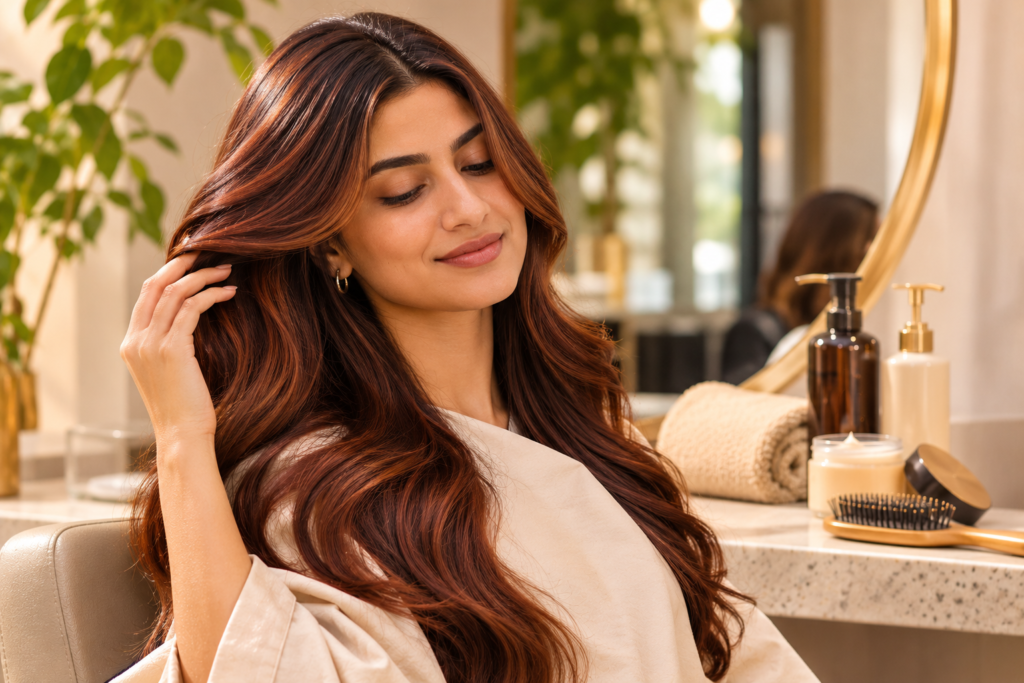
Getting your hair coloured is only half the equation. How you care for it afterward determines whether that colour stays vibrant for weeks or starts fading and looking dull within days. Colour-treated hair has different needs than untreated hair, and a few adjustments to your routine make a meaningful difference.
Washing Frequency and Water Temperature
Washing less frequently helps preserve colour, since every wash gradually strips some pigment, particularly in the first couple of weeks after a colour appointment. When you do wash, use lukewarm rather than hot water: heat opens the hair cuticle more than necessary, which accelerates colour fade, while cooler water helps keep the cuticle smoother and the colour locked in longer.
Choosing Sulphate-Free Products
Sulphates are the ingredients responsible for the rich lather in many shampoos, but they are also particularly effective at stripping colour. Switching to sulphate-free shampoo and conditioner is one of the single most impactful changes you can make for colour-treated hair, since it cleanses without being as aggressive on the colour molecules sitting in the hair shaft.
Heat and UV Protection
Heat styling tools and sun exposure both fade colour faster, particularly lighter or more vibrant shades. A heat protectant before using any styling tool is worth treating as a non-negotiable step, not an optional extra, and reducing the frequency of high-heat styling where possible helps colour last longer between appointments. If you spend significant time outdoors, a UV-protective hair product or simply covering your hair in strong sun helps prevent the kind of fading that shows up as brassiness or dullness over time.
Root Touch-Up Timing
How quickly your roots need attention depends on how fast your hair grows and how much contrast there is between your natural colour and your chosen shade. As a general guide, most global colour needs root attention every four to six weeks, while highlights and balayage can typically go longer between visits since the technique is designed around a softer regrowth line. Keeping to a consistent schedule, rather than waiting until the contrast is very noticeable, tends to produce a more seamless result over time.
Nourishing Treatments Between Colour Sessions
Colouring, especially lightening, can leave hair more porous and prone to dryness. Regular nourishing treatments between colour appointments help maintain the condition of your hair, which in turn helps colour look more vibrant, since healthy, well-moisturised hair reflects colour and shine more effectively than dry, damaged hair. Merakki’s Hair Spa treatment is a useful addition to a colour-care routine for exactly this reason.
Why Colour Fades in the First Place
Hair colour sits in and just beneath the outer layer of the hair, the cuticle. Every wash, every pass of a hot tool and every hour in strong sun loosens a little of that pigment, and the colour molecules in vivid reds, coppers and fashion shades are small enough to wash out gradually. Hair that has been lightened is also more porous, which means it takes in and releases moisture and colour faster. Understanding this makes it easier to see why the habits in this guide matter: each one either protects the cuticle or reduces the load on it.
Your First Week After Colouring
- Wait at least 48 to 72 hours before the first wash.
- Avoid swimming pools and long stretches in strong sun during this window.
- Skip tight hairstyles and heat tools where you can, so the colour settles evenly.
- Use lukewarm water and a sulphate-free shampoo for the first wash.
- Leave conditioner on the lengths for a few minutes instead of a quick rinse.
Hard Water and Colour
In many parts of Delhi NCR, tap water is hard, meaning it carries a high mineral content. Those minerals can build up on hair, leaving it feeling rough and making colour look dull or brassy sooner than expected. A shower filter can help, as can an occasional clarifying wash, used sparingly because it can also strip colour. Your colourist can advise on how often this suits your particular shade.
Smoothing Treatments and Colour: Mind the Timing
If you are thinking about a smoothing treatment such as keratin alongside colour, the order and spacing matter. Some treatments can change how colour looks, and some colour services can affect how well a treatment performs. Plan the sequence with your colourist instead of booking each service in isolation.
Common Mistakes That Fade Colour Faster
A few habits quietly undo good aftercare without most people realising it. Washing hair daily out of habit, rather than only when needed, is one of the most common. Skipping heat protectant because a style only takes a few minutes is another, since even brief heat exposure adds up over repeated use. Leaving root touch-ups too long and then compensating with a stronger, more concentrated treatment can also create uneven results. Being aware of these small, cumulative habits is often more useful than any single product recommendation.
Protecting Your Investment
Colour-treated hair is ultimately an investment, both in the appointment itself and in how it continues to look afterward. Small, consistent habits, gentler products, heat protection, timely touch-ups and regular nourishment, matter more over time than any single product or treatment on its own. If you are still deciding on a colour approach before your next appointment, our guides on Global Hair Colour vs Highlights and choosing hair colour for your skin tone are worth reading first.
FAQs
Q1. How soon after colouring can I wash my hair?
Most colourists recommend waiting at least 48 to 72 hours before the first wash, to give the colour time to fully settle in the hair cuticle.
Q2. Do I really need sulphate-free shampoo, or is any gentle shampoo fine?
Sulphate-free is specifically recommended because sulphates are particularly effective at stripping colour pigment, more so than other mild cleansing agents.
Q3. Can swimming affect colour-treated hair?
Yes, chlorine and salt water can both affect colour and dry out hair. Rinsing hair with clean water before and after swimming helps minimise the impact.
Q4. How do I prevent brassiness in blonde or lightened hair?
A purple or blue-toned shampoo used periodically can help neutralise brassy tones, alongside UV protection and minimising heat exposure.
Q5. Is it normal for colour to fade even with good aftercare?
Some natural fading is normal over time, even with excellent care. Good aftercare slows the process and keeps the fade looking even rather than patchy or dull.
Keep Your Colour Looking Its Best
For touch-ups, nourishing treatments or advice on your specific colour, book an appointment with Merakki’s team in Faridabad.